Case Study 04 | Persona Adoption & AI Enablement

Turning validated personas into a reusable decision system.

Sinclair teams needed a consistent customer lens they could use across product decisions and future research, not a persona deck that would sit on a shelf. After behavior-based personas were validated, I built a Segmentation Hub with the OpenAI Codex agentic platform in two weeks to make the model easier to reuse.

Lead UX Researcher80+ marketsOpenAI Codex build | 2 weeks
Project overview: from persona deliverable to reusable system
01
Validated personasBehavior-based persona definitions created a shared customer lens.
02
Segmentation HubI independently built the Hub with the OpenAI Codex agentic platform in two weeks.
03
Consistent taggingResearch could use the same persona definitions across briefs and stored evidence.
04
Evidence and planning reuseTeams could retrieve evidence and use the same language in roadmap discussions.
2 weeksindependent Segmentation Hub build
Consistent taggingacross past and future research
Shared languagefor research and roadmap conversations
2 weeks
Independently built the Segmentation Hub with the OpenAI Codex agentic platform.
Shared model
Consistent persona tagging connected past and upcoming research to product and research roadmap decisions.

How my work influenced the decision

1

Validate the customer model

Keep persona definitions grounded in motivation and behavior.

2

Build the adoption mechanism

Create the Segmentation Hub with OpenAI Codex.

3

Enable consistent tagging

Connect past and upcoming research to the same persona definitions.

4

Make evidence easier to reuse

Help researchers retrieve representative participant evidence by persona.

5

Carry the same language into planning

Use shared persona definitions in future research and product roadmap conversations.

The tradeoffs that shaped the work

Static deck vs reusable system

A deliverable can be forgotten; a shared system makes reuse easier.

Geography vs motivation and behavior

Use customer motivations and behaviors as the core segmentation lens.

One-time study vs repeatable language

Make the same definitions usable across future studies and teams.

01

The real challenge was scaling persona adoption across teams

Creating personas was only the first step. The bigger opportunity was making sure product teams and researchers could reuse the same definitions in future work. The Segmentation Hub turned a one-time research deliverable into a repeatable system for customer-centered decision making.

product adoption

Bring persona needs and behaviors into roadmap conversations so teams could discuss opportunities through a shared customer definition rather than geography or demographics alone.

Research adoption

Use the same persona tags across research briefs, stored evidence and future studies so findings could be reused and compared more consistently.
02

A clear persona definition gave teams one customer language

The persona framework remained grounded in motivation and behavior. Instead of asking teams to memorize a large deliverable, I focused adoption on a few consistent elements: what the customer is trying to accomplish, how they behave, what creates friction and what could change their behavior.

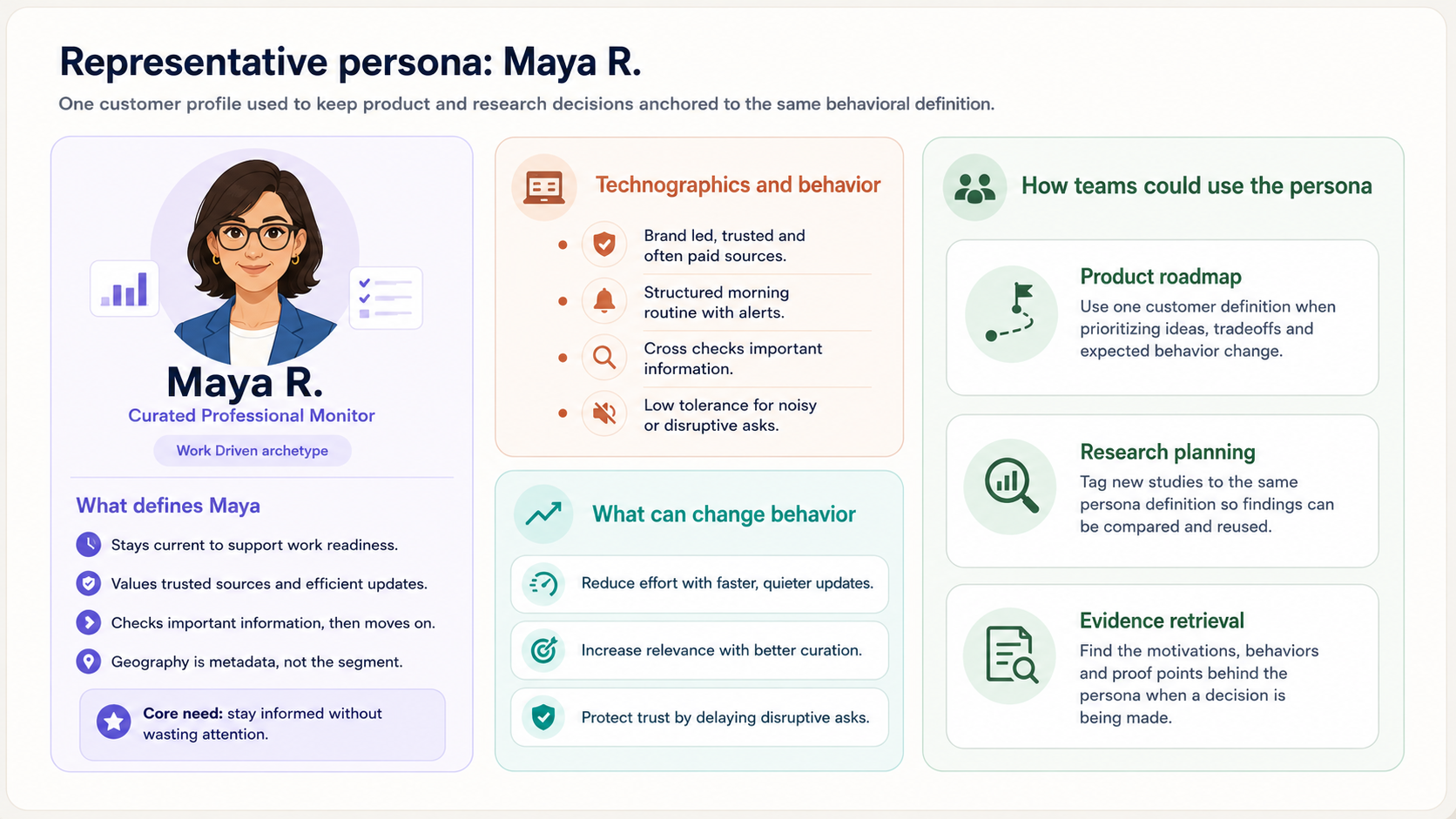
Representative Maya persona showing the behavioral definition, technographics, behavior cues and how teams can use the persona.

The shared behavioral definition gave product and research teams a consistent customer lens.

View full visual
03

I built the Segmentation Hub independently in two weeks

To move the personas from a static research artifact into an operating system, I independently developed a Segmentation Hub using the OpenAI Codex agentic platform. The tool organized participant evidence, persona definitions and research tags in one place so teams could use the same customer language after the original study was complete.

Consistent tagging

Past and upcoming research could be connected to the same persona definitions instead of creating new audience labels for every study.

Evidence retrieval

Researchers could locate representative evidence, participant moments and supporting context by persona when a new question emerged.

Reusable definitions

product and research partners had one reference point for customer motivations, behaviors and needs across future work.

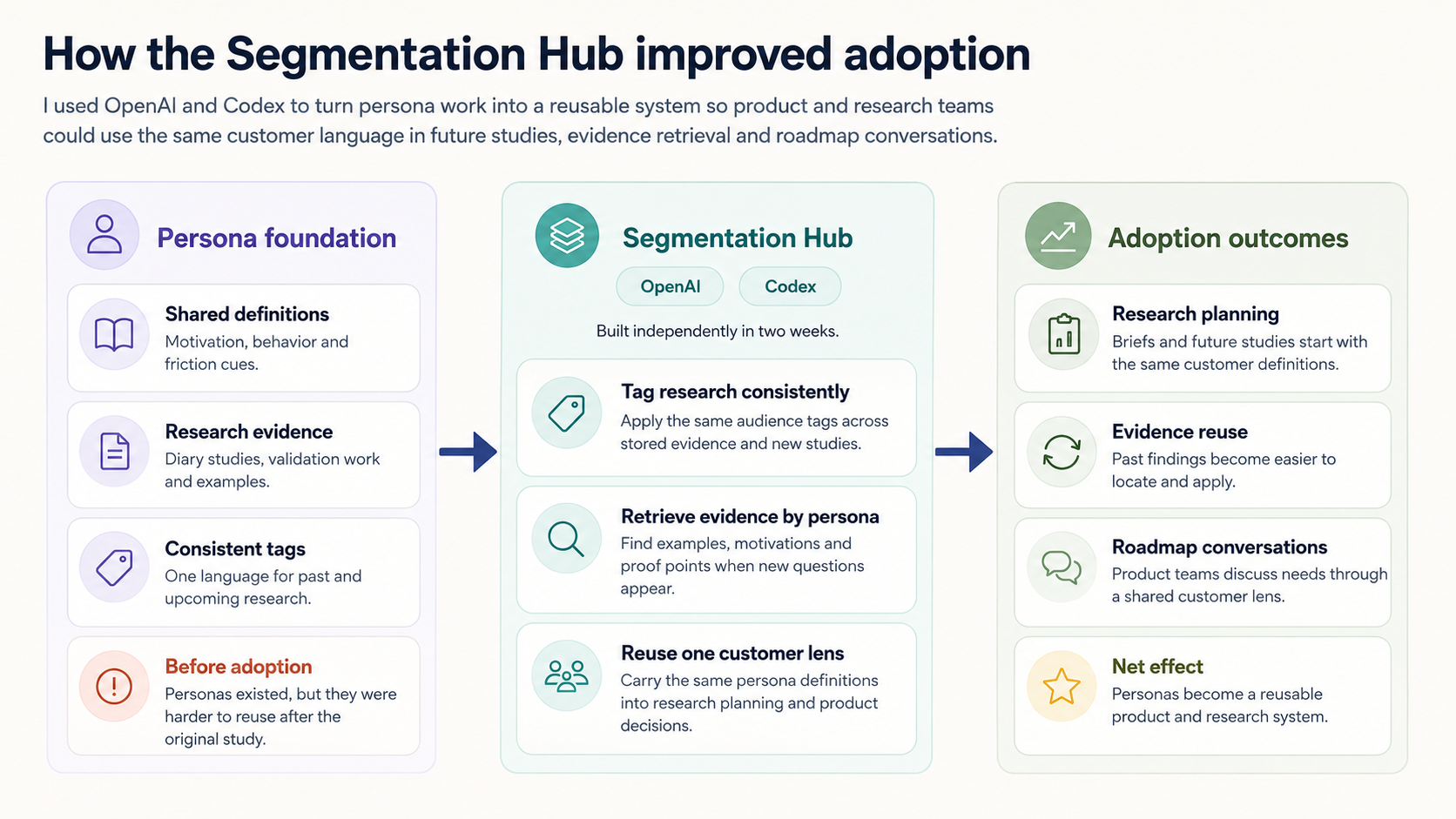
Segmentation Hub adoption visual showing persona foundations, OpenAI Codex enablement and adoption outcomes across research and product planning.

The OpenAI Codex Segmentation Hub made consistent tagging, evidence reuse and roadmap adoption easier.

View full visual
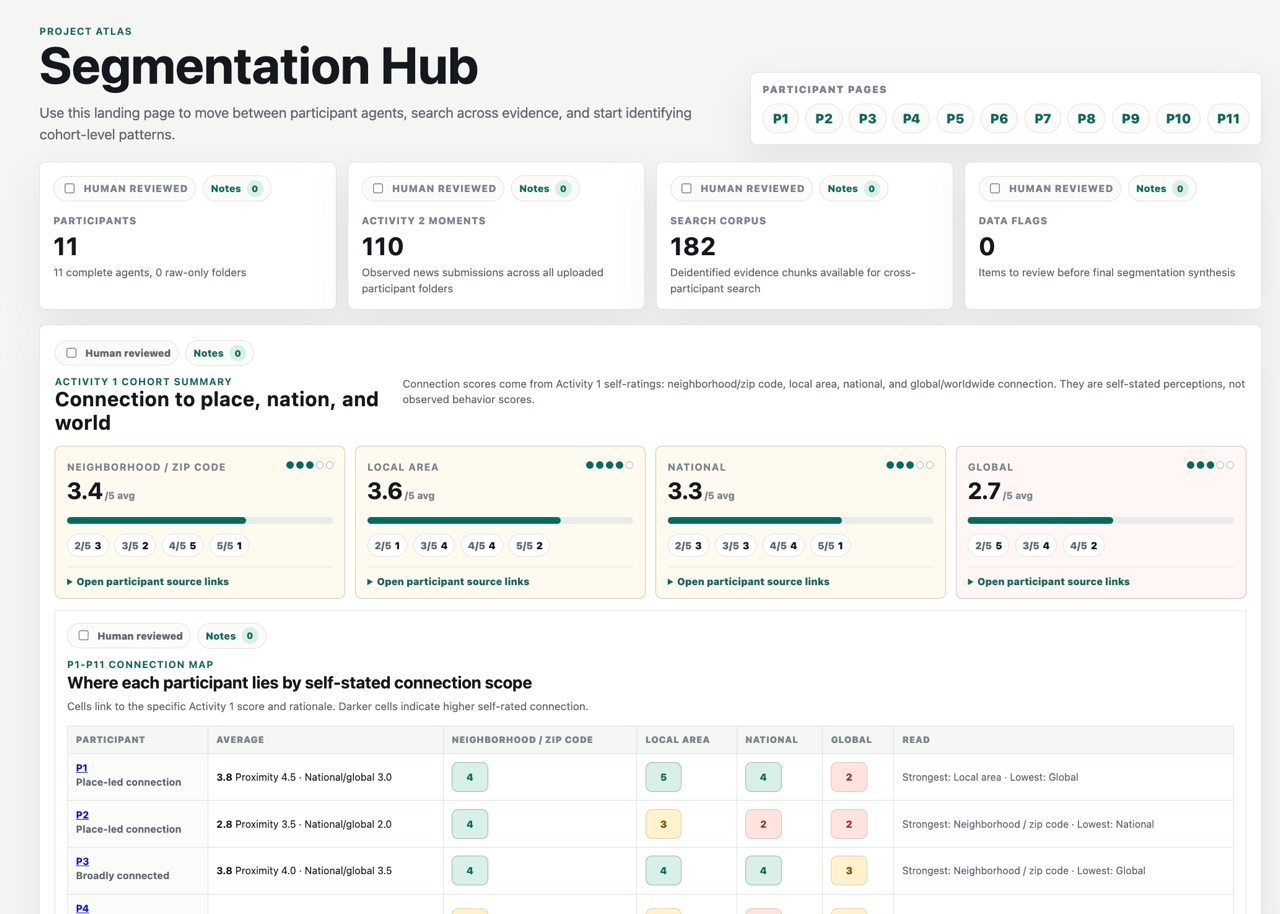
Actual Segmentation Hub interface with participant evidence, search corpus and segmentation data.

I built the Segmentation Hub independently with the OpenAI Codex agentic platform in two weeks.

View full visual
04

The same persona definitions started showing up in future work

The adoption mechanism mattered as much as the original personas. I began asking which personas a new research request would affect, and I encouraged similar conversations with product partners so roadmap and research planning used the same customer language.

Research briefs became more consistent

New studies could identify the affected personas early, making recruiting, synthesis and evidence reuse easier to plan.

Past research became easier to reuse

Uniform tagging created a clearer way to connect earlier findings to current questions instead of treating every study as isolated evidence.

product conversations became more customer centered

Persona motivations and behaviors gave roadmap discussions a stronger customer lens than geography or demographic targeting alone.

05

The persona work became a reusable product and research system

The strongest outcome was not the persona document itself. It was a shared operating language that could travel into product planning, future research and evidence retrieval. AI helped me make that adoption practical by turning the framework into a tool teams could continue to use.

What changed

Personas moved from a research deliverable to a repeatable way to tag evidence, frame new studies and discuss customer needs in roadmap decisions.

The source does not provide an adoption percentage or business metric, so this page intentionally keeps the outcome qualitative.