Case Study 03 | Research Practice & Prioritization

Turning research demand into strategic portfolio and staffing decisions.

At Capital One Auto Navigator, a three-person research team supported a growing portfolio of products and partners. I simplified the prioritization model from nine factors to four, made tradeoffs visible, and used demand data to help the practice move from reactive support toward strategic partnership.

Senior User Research ManagerCapital One Auto NavigatorPortfolio planning
Project overview: from rising demand to strategic capacity
01
Growing demandResearch requests were rising while team capacity was constrained.
02
4-factor prioritizationThe model moved from nine factors to four and became easier to use.
03
Tradeoffs made visibleDemand data clarified what to prioritize, sequence and deprioritize.
04
Strategic capacityThe evidence supported more strategic work and an approved researcher.
25%increase in strategic requests after adoption
6requests deprioritized in November
1additional researcher approved
25%
year-over-year increase in strategic research requests after the model was adopted
1 headcount
additional full-time researcher request approved after capacity became visible

How my work influenced the decision

1

Expose the queue problem

Make growing intake, long timelines and competing demand visible.

2

Simplify the model

Reduce the framework from nine factors to four so it can be used consistently.

3

Make tradeoffs explicit

Score impact, confidence, complexity and effort to support sequencing and deprioritization.

4

Use demand data to influence leadership

Show where the team was spending time and what additional capacity could unlock.

5

Secure additional capacity

Use the evidence to support approval for one additional full-time researcher.

The tradeoffs that shaped the work

Nuance vs usability

A nine-factor model captured nuance but was too complex for routine use.

Reactive intake vs strategic portfolio

Move from case-by-case support toward a prioritized view of research demand.

Current capacity vs future demand

Three researchers supported 39 designers while demand continued to grow.

01

Research demand was outgrowing the team's operating model

The challenge was not only too many requests. It was the absence of a simple, shared way to discuss value, urgency and capacity across the product portfolio. By turning prioritization into a transparent operating model, I helped leadership see both the demand pattern and the staffing implications.

Make strategic tradeoffs visible

I created a four factor model and recurring prioritization process that made the research portfolio easier for product, Design and leadership to understand.

Use demand data to shape the practice

I used the prioritization data itself to show where the team was spending time, how demand was changing and why additional research capacity was needed.
02

Research demand was growing faster than team capacity

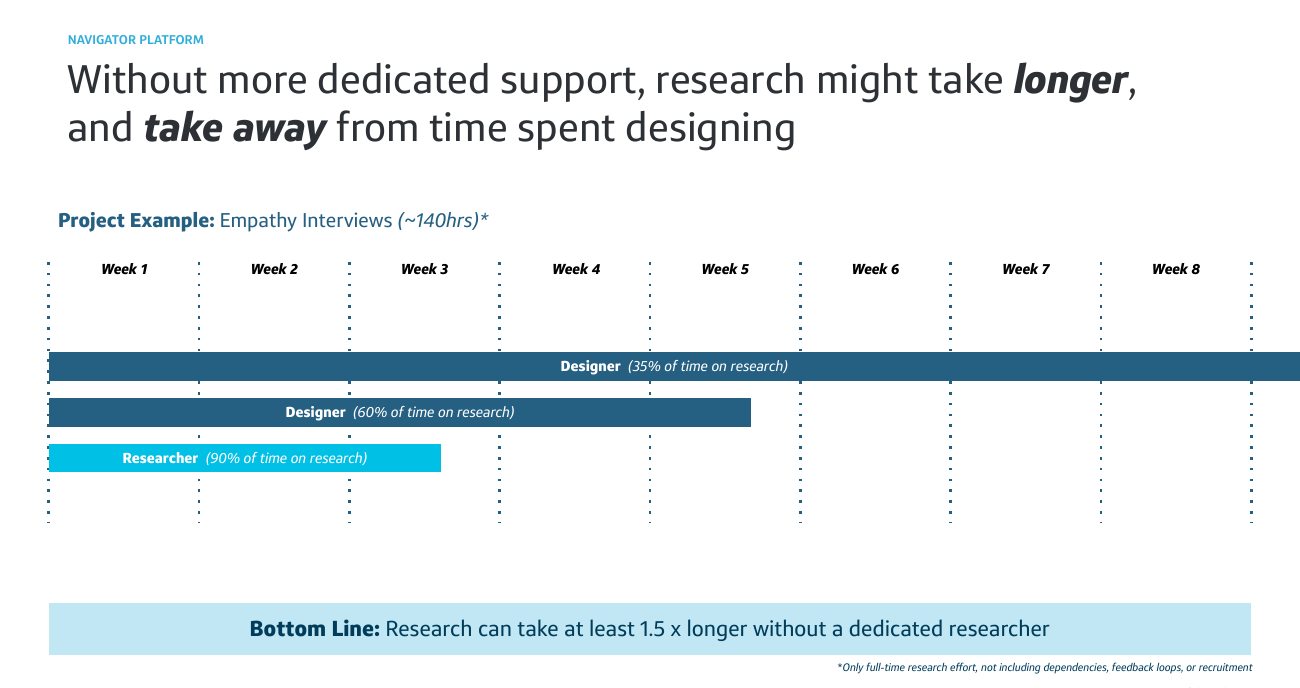
Three researchers supported 39 designers, while ad-hoc requests made it difficult to distinguish strategic work from overlapping studies or work that partners could self-serve with research support.

03

The first model was too complex to use

First attempt

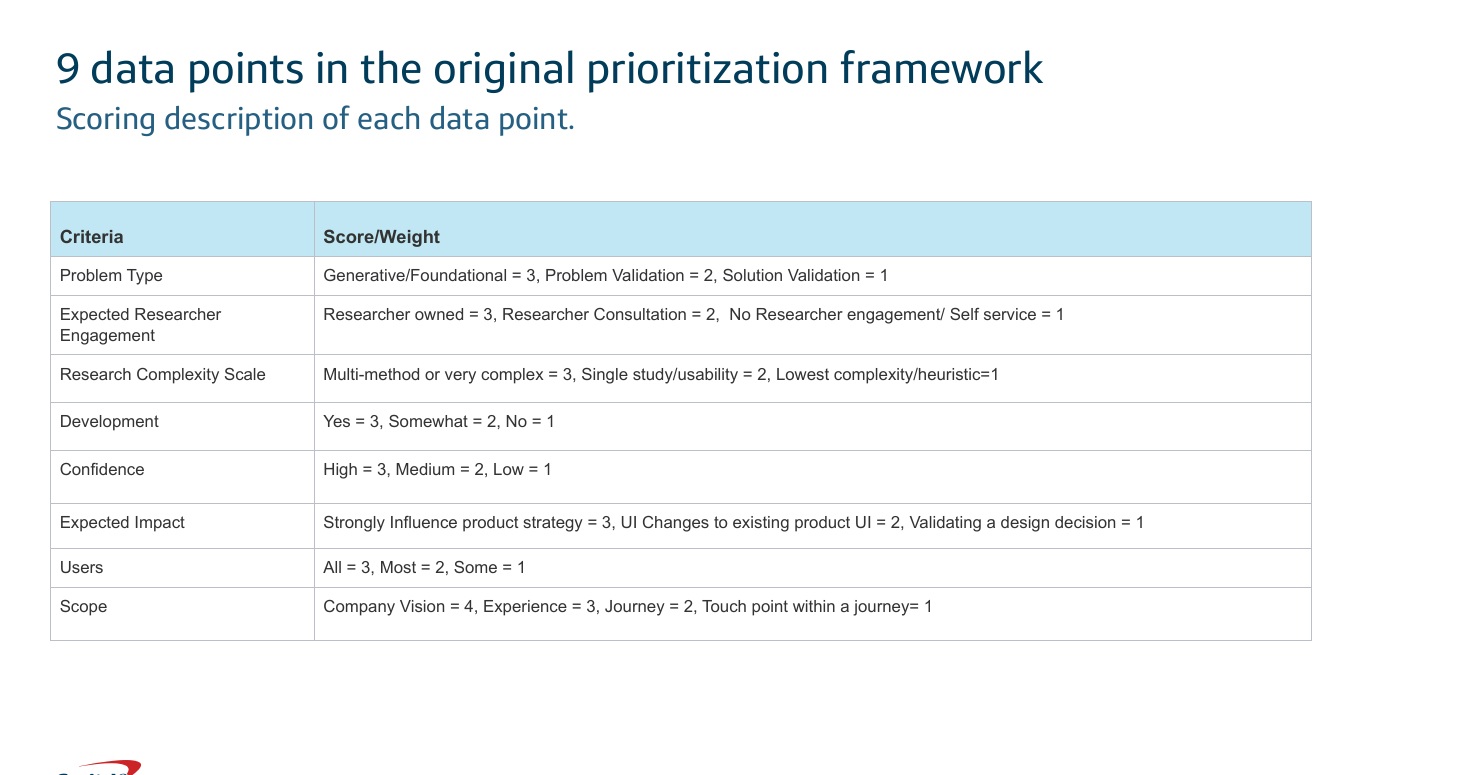
A richer nine-factor model captured nuance but created too much effort for regular use.

Adaptation

I reduced the framework to four clearer inputs and prioritized adoption over theoretical precision.

The simplified four factor scoring framework made research demand easier to evaluate and discuss.

The simplified four factor scoring framework made research demand easier to evaluate and discuss.

View full visual
04

A simpler model made demand and tradeoffs visible

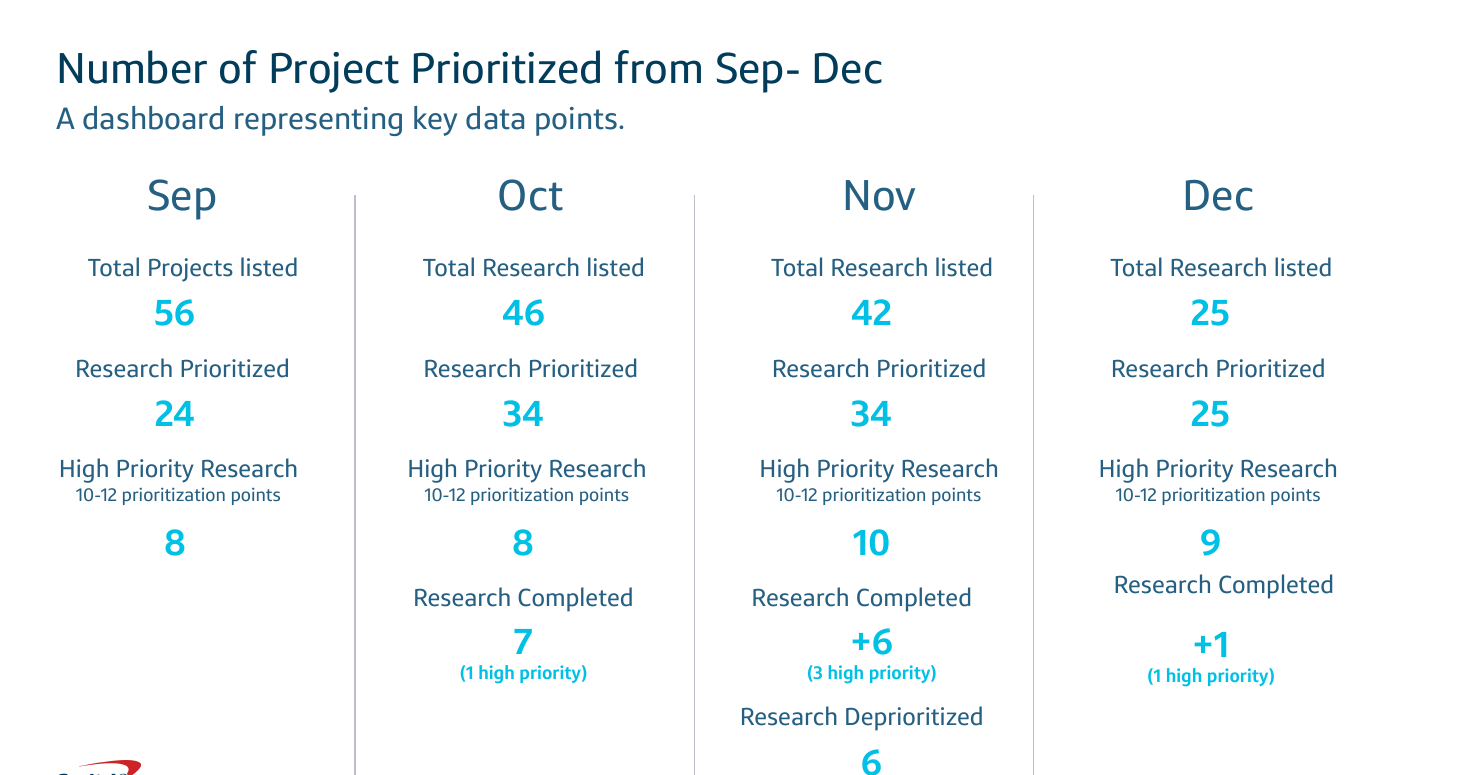
The model gave leadership a transparent reason to sequence, deprioritize or redirect work. In November alone, six requests were deprioritized because they lacked sufficient business impact or overlapped prior evidence.

Quarterly dashboard showing demand, priorities and completions month to month.

Quarterly dashboard showing demand, priorities and completions month to month.

View full visual
05

The model showed a staffing problem, not just a queue problem

Once the queue was visible, the team could show what additional capacity would unlock: deeper embedded work, proactive research, more foundational studies and less late-stage risk.

Headcount request framed around the value additional research capacity would unlock.

Headcount request framed around the value additional research capacity would unlock.

View full visual
Result

One additional full-time researcher request was approved.

The 25% increase is described in the source as occurring after adoption and contributing to the practice shift; it is not presented here as a sole-cause claim.